The Robotics Laboratory
Smarter laboratories operating at higher resolution, with robotic precision, guided by artificial intelligence.
Research laboratories today run on human hands. A scientist prepares a sample, positions a sensor, records a reading, adjusts a parameter, repeats. This is precise work, but it is slow, limited by human attention, and difficult to reproduce across different labs on different days.
Robotics changes this. When a laboratory is robotic, the scientist designs the experiment and the robot executes it — thousands of variations, round the clock, millimeter accuracy, every parameter logged automatically.
The bottleneck shifts from human labor to human creativity. That is what we are building at Zero-X Labs.
The Robotic Laboratory
A robotic arm positions sensors, samples, and test subjects according to a computer model. The model learns from each run and designs the next experiment better than the previous. This is not automation of a fixed process. It is automation of discovery itself.

The difference between a successful experiment and a failed one is often a millimeter. Robotic systems operate at this scale consistently. For controlled environment agriculture, for bioprocess development, for advanced materials testing — the robot does not tire, does not miscount, does not lose focus after hour thirty.

Every movement, every measurement, every environmental condition is recorded by the robotic system, timestamped, and stored alongside the result. The human scientist does not write down readings from a display. The robot does. The dataset is complete, auditable, and ready for machine learning analysis.

Equipment & Infrastructure
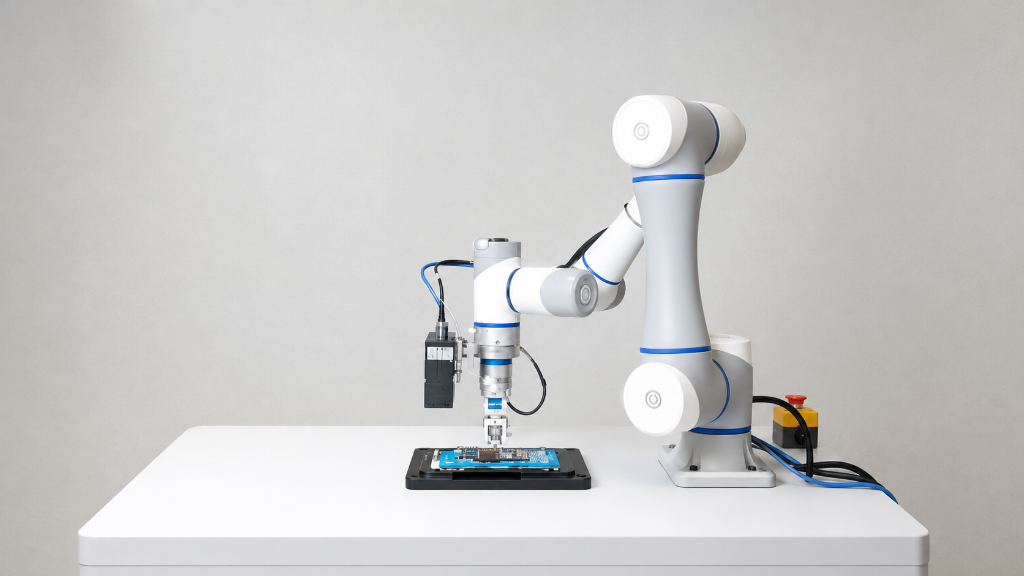
Cobot arm with custom end-effector engaging a PCB fixture — automated hardware interaction in a controlled lab environment
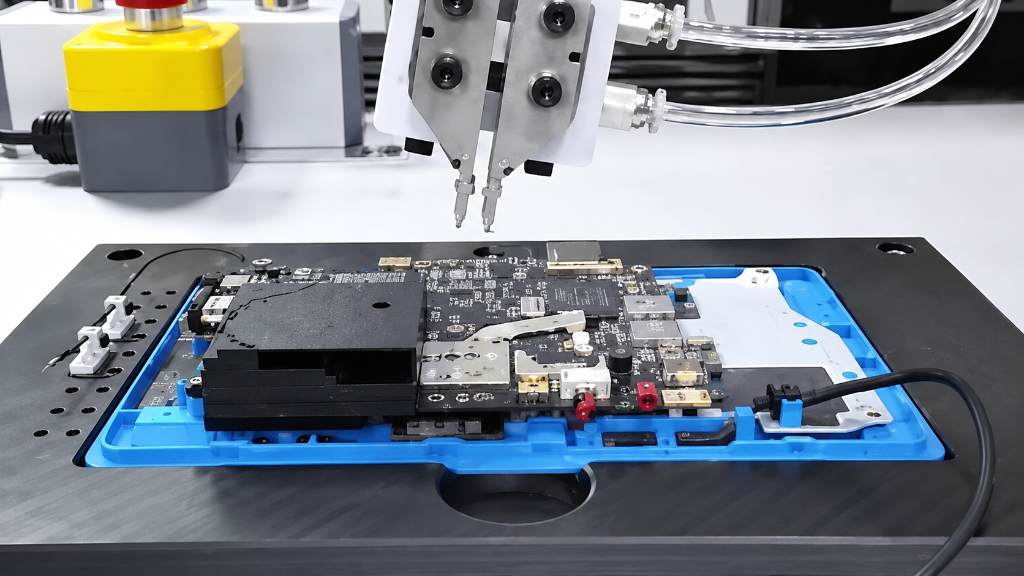
Precision pneumatic screwdriver head performing targeted fastening on a populated electronics board
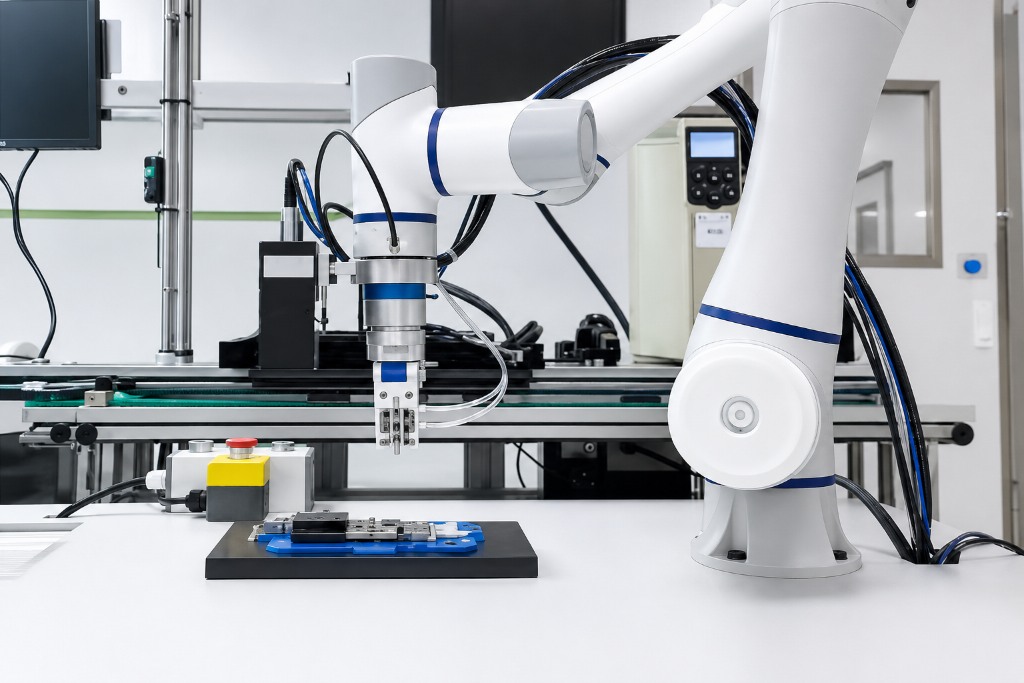
6-axis collaborative robot with inspection tool — full system overview of a robotic test and maintenance cell
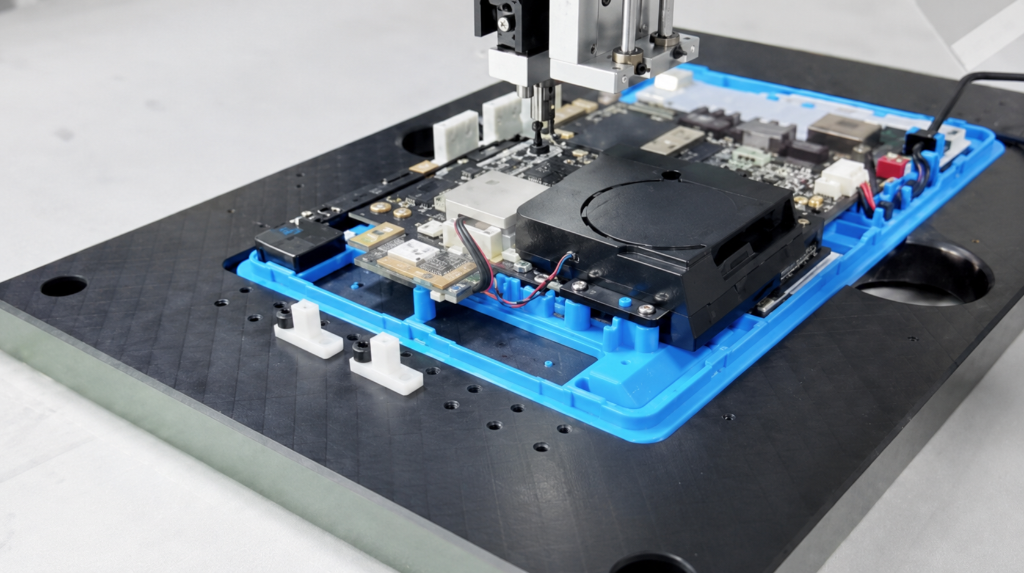
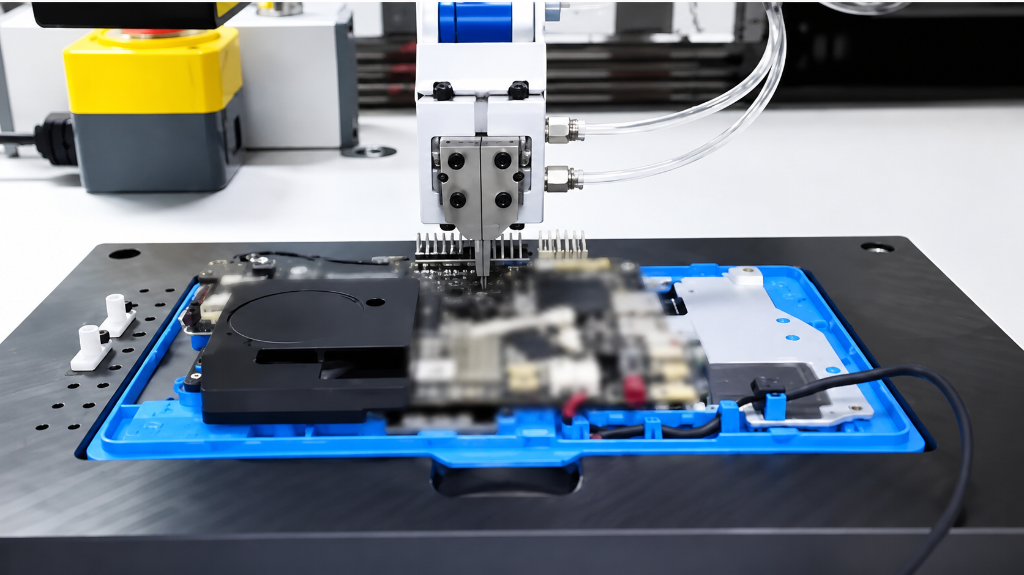
Close-up of dual-probe end-effector contacting PCB test points — sub-millimetre positional accuracy on live hardware
Industrial cobot cell with linear-rail integration — full robotic manipulation setup for electronics manufacturing tasks
From physical systems to laboratory automation
Zero-X Labs was founded to build physical systems that solve real problems — converting waste to energy, producing clean heat and power at industrial scale. Robotics is a natural extension of this work. The same engineering discipline that validates a gasification system through thousands of hours of runtime data now applies to laboratory automation.
We work on robotics for two reasons.
First, our own research requires it. Developing advanced bioprocess systems, optimizing controlled environment agriculture, validating AI models for industrial applications — these are experiments that demand robotic precision and robotic patience. A human research team cannot run three thousand variations of a growth medium formula in a week. A robotic lab can.
Second, the market needs it. Research laboratories in agriculture, biotechnology, and industrial automation are under pressure to produce results faster, with fewer errors, and at lower cost. Robotic laboratory systems deliver this. The technology exists. The integration is what we do.
We do not manufacture robotic arms. We design the systems that connect robotics to research problems — the software, the sensors, the data pipeline, the closed-loop control that turns a general-purpose robot into a specific laboratory tool.
The future of research is not larger laboratories. It is smarter laboratories operating at higher resolution, with robotic precision, guided by artificial intelligence.
Zero-X Labs is building that future in Brandenburg.
ceo@zero-x.co →